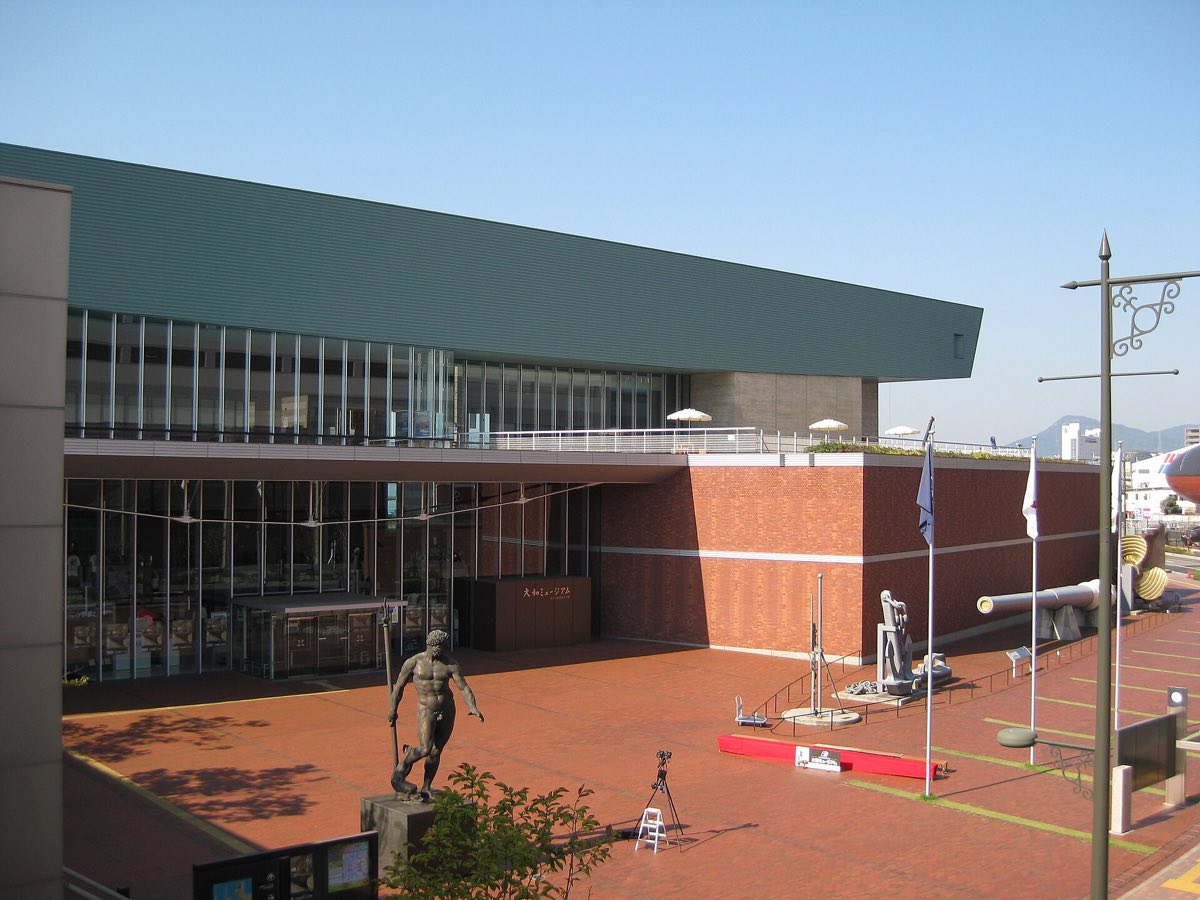
Two serious museums,
two minutes apart,
and no listicle has them.
The Yamato Museum and the JMSDF submarine museum sit either side of one street in a former naval arsenal town forty minutes from Hiroshima. Between them they fill three to four hours, both are entirely indoors, and neither appears in any English round-up of things to do in this city.
Kure is the best day out of Hiroshima that no English guide carries. The Yamato Museum and the JMSDF submarine museum opposite it fill 3–4 hours between them, both are entirely indoors — which makes this the trip to hold back for a wet day — and the round trip is 5–7 hours on the JR Kure line, about 40 minutes each way. Admissions and opening days are unverified; both museums close on at least one weekday, so check hours the day before rather than turning up.
What Kure is, and the one thing to check
Answer firstA former naval arsenal city forty minutes east of Hiroshima, with two museums about ships facing each other across one street.
Check both museums' opening days before you travel. That is a normal precaution rather than a warning — each closes on at least one weekday in a normal week and we could not verify which, and a wasted trip costs you about 80 minutes of rail plus the day. We looked into a report that the Yamato Museum was closed for renovation and could not substantiate it; we are not repeating it as fact, and you should plan on the museum being open.
Kure was the Imperial Japanese Navy's principal arsenal and the yard where the battleship Yamato was built. The Yamato Museum's centrepiece is a large-scale model of that ship, displayed in a hall constructed around it, with aircraft, human-torpedo craft and material on the city's wartime shipbuilding alongside. It is a technical and municipal museum rather than a memorial, and its register is closer to industrial history than to the Peace Memorial Museum in the city — but it is still a place about a war and about the men who died in these ships, and it does not read as a day out.
The JMSDF Kure Museum opposite — locally the Iron Whale — is built around a decommissioned submarine mounted on land, which you walk through: the control room, the bunks, the width of the passageways. Its other permanent subject is minesweeping. Admission is reported to be free, which we could not verify — carry the price of a ticket anyway.
The rest of Kure worth your time: the waterfront where Maritime Self-Defense Force vessels lie alongside, the hill viewpoint over the harbour, and a harbour cruise that passes the submarine berths. Cruise operators, schedules and fares are not verified.
One scheduling point. Both museums are entirely indoors, which makes Kure the trip to keep in reserve for weather. Tsuyu, the rainy season, normally runs 6 June to 19 July, and July is the wettest month of the year at 279.8mm — hold this day back rather than spending it on a clear morning you could have given to Onomichi.
Kure, practically
Plan your visitYamato Museum, submarine museum, or both
ComparedTwo museums, two minutes apart, aimed at different people. Most visitors who make the trip do both, and the pairing is what turns a museum stop into a day.
| Yamato Museum | JMSDF Kure Museum (Iron Whale) | Both | |
|---|---|---|---|
| Subject | The battleship Yamato, Kure's arsenal, wartime shipbuilding | Submarines and minesweeping, in a real decommissioned boat | Kure as a naval city, whole |
| The thing you remember | The scale model in its purpose-built hall | Walking the inside of a submarine hull on dry land | The gap between the two |
| Time needed | 2–2.5 hours | 1–1.5 hours | 3–4 hours |
| Admission | Not verified | Reported free — unverified | Not verified |
| Closing day | At least one weekday — unverified | At least one weekday — unverified | Check both before travelling |
| Suits | Anyone who reads history; engineers | Children over about 8; anyone at all curious about submarines | A proper half day |
| Verdict | WORTH IT | WORTH IT | WORTH IT |
A renovation-closure report for the Yamato Museum could not be substantiated and we are not treating it as fact. What is real is that both museums have closing days we could not pin down — confirm them the day before rather than on the platform. Journey times in this section are indicative rail-line estimates, not timetable readings, and fares are left blank on purpose: we could not verify a single day-trip fare against JR West's published table on 4 August 2026. A page that tells you a fare is unverified is more use than a page that guesses it.
Is Kure your day?
Who it suitsGuided Kure, and the wider day-trip category
Booking and getting thereKure is easy to reach independently — one train, then a short walk — so a guide buys you interpretation and a second destination rather than logistics. We do not publish tour prices, ratings or review counts because we have not verified them; open a link for live pricing.
Kure and the Yamato Museum — the questions people actually ask
FAQPage schema pairedIs the Yamato Museum open?
Plan on yes. We looked into a report that it was closed for renovation and could not substantiate it, so we are not repeating it. What is worth two minutes of your time is the closing day: each of the two museums shuts on at least one weekday and we could not verify which. Check the day before — the round trip is 5–7 hours and about 80 minutes of it is rail.
How do I get to Kure from Hiroshima?
JR Kure line from Hiroshima Station, roughly 40 minutes and quicker on a rapid service. Both museums are a short walk from Kure Station on the harbour side and about 2 minutes apart from each other. The fare is not verified — check JR West. Get to Hiroshima Station on Hiroden line 1, 2, 5 or 6 for a flat ¥240.
How much does the Yamato Museum cost?
Not verified, and we are not going to print an admission price we could not confirm. The JMSDF Kure Museum opposite is reported to be free, which we also could not verify — carry cash for both. For scale, Hiroshima's own Peace Memorial Museum is ¥200, so municipal museum pricing in this prefecture is low by any international standard.
How long do you need in Kure?
3–4 hours for both museums — about 2 to 2.5 hours in the Yamato Museum and 1 to 1.5 in the submarine museum — and 5–7 hours door to door from Hiroshima. Add an hour if you want the waterfront where the Self-Defense Force vessels lie alongside and the hill viewpoint over the harbour.
Is Kure suitable for children?
From about age 8. The submarine is the part that lands — you walk through the hull, past the bunks and the control room — and most children find that concrete in a way that a display case is not. Below 8 there is a lot of reading and a lot of standing. See the family page for the rest of the trip.
Is Kure a war memorial or a museum?
Both, and it is worth going in knowing that before you give it 3–4 hours. The Yamato Museum is a municipal museum about shipbuilding and a city's industry, but the ship it is built around went down with most of its crew in 1945, and the human-torpedo craft on display were designed to kill the person inside them. The register is technical rather than commemorative; it is still not a day out.
Can I combine Kure with Rabbit Island?
Not comfortably in one day. Okunoshima is reached from Tadanoumi, roughly 1h20 out on the same JR Kure line, and the ferry plus the island needs its own full day of 7–9 hours — see the Okunoshima page. Tomonoura pairs better, and there is a guided day that does exactly that combination.
Is Kure worth it in the rain?
It is the trip we would pick for a wet day, because both museums are entirely indoors and you can spend 3 hours without stepping outside. Onomichi and Sandankyo are the two that rain ruins outright. Tsuyu, the rainy season, normally runs 6 June to 19 July, and July is the wettest month at 279.8mm — hold Kure back for the day the forecast turns.
Some people should.
Kure is a 40-minute commuter ride and almost every visitor does it as a day trip, which is correct. The exception is anyone continuing east along the Kure line toward Tadanoumi and Okunoshima the next morning — a night in Kure turns two awkward days into one easy pair. Rooms here are business-hotel stock at business-hotel prices, well below Hiroshima's. Budget the extra: Hiroshima Prefecture introduced a ¥200 per person per night accommodation tax on 1 April 2026, on rooms of ¥6,000 or more per person before tax and meals. It applies across the prefecture — the city, Miyajima, Onomichi — and it is not included in prepaid booking totals, so you will be asked for it at check-in. There is no separate Hiroshima city lodging tax.
Compare Kure hotels