Yes — and the mistake
is giving it four hours.
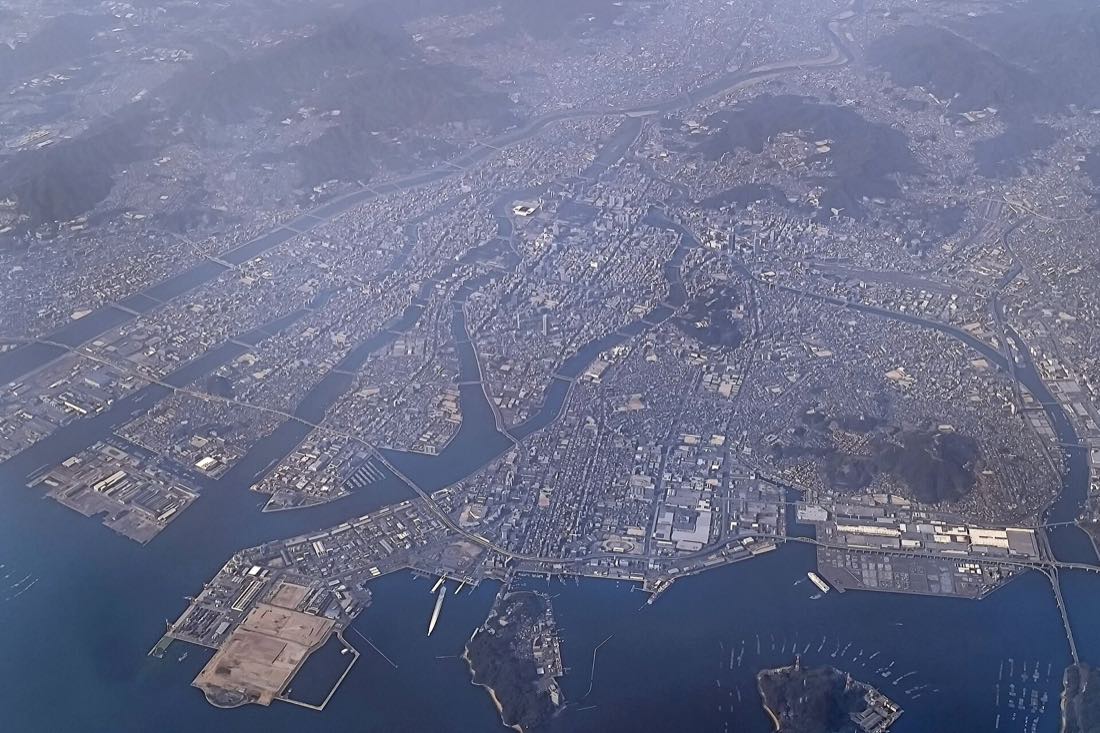
Hiroshima is an ordinary, comfortable, well-run rebuilt mid-size Japanese city that happens to contain one of the most important places on earth. Both halves of that sentence are true, and almost every itinerary gets the balance backwards: four hours for the important place and none at all for the ordinary city.
Come, and give it two nights. One day for the Peace Memorial Park and the city, one for Miyajima timed to the tide. It is also cheap in a way nobody mentions: the museum is ¥200 and every paid admission in the city and on the island together comes to ¥4,950, about $31. Do not come for the streetscapes — the rebuild was practical rather than picturesque, and if you are hunting old Japanese townscape you will be disappointed. And a day trip from Kyoto works logistically while costing you exactly the thing you came for.
Two true things that nobody says together
The honest answerMost pages about Hiroshima pick one half of the truth. The ones selling tours say it is unmissable; the ones being clever say it is a dull provincial city with a museum. Both are describing something real and neither is describing the trip you will actually have.
Hiroshima is a comfortable, well-run, entirely ordinary mid-size Japanese city. The bomb took the old fabric and the rebuild was practical rather than picturesque. Come for the Peace Park, the island and the food — not for the streetscapes. The mistake almost everyone makes is giving the important part four hours and the ordinary part none.
So the argument is not whether to come — it is how much time to give the two halves. The Peace Memorial Museum needs more than people budget and the city needs more than zero. Give the museum a morning and the park an afternoon and you have a day. Give Miyajima the second day and you have the trip. Everything beyond that — the castle grounds, the food, the day trips — is the third day, and it is the day most people never book.
Allow two hours in the Peace Memorial Museum, three if you read properly, and leave the two hours after it empty. At peak you don't walk the exhibition so much as get carried through it — during Obon last year staff had to stop admissions entirely. Everyone who budgeted 45 minutes regrets it.
The practical shape of that: the museum opens at 7:30 year-round, and correcting a widespread error, not 8:30. Almost nobody uses that hour. The officially acknowledged peak is 11:00–14:00, which the Japanese press described as 「通勤電車並み」 — like a commuter train. Allow 90 minutes to two hours inside, three if you read properly, and leave the two hours after it empty.
Rated by who you are
Who it suitsWhat each amount of time actually buys
By length of stayThe honest version, with what you lose in each row rather than what you gain.
| Time you give it | What you get | What you lose | Verdict |
|---|---|---|---|
| A layover, 3–4 hours | The A-Bomb Dome, the Cenotaph and a fast walk of the park. All free. | The museum, entirely. Two hours minimum is the floor and you do not have it. | DEPENDS |
| A day trip from Kyoto or Osaka | The park and a compressed museum visit, back the same night. Shin-Osaka is ¥9,890 unreserved each way. | You arrive with the coaches at the 11:00–14:00 peak and leave before the museum has done its work. And you get no Miyajima. | DEPENDS |
| One full day, staying over | The museum at 07:30 in an empty building, the park properly, and the Dome floodlit after dark. | Miyajima. Which is half the reason people come to this corner of Japan. | WORTH IT |
| Two nights | Park and museum on day one, Miyajima timed to the tide on day two. Every admission across both comes to ¥4,950. | The ordinary city — the food streets, the castle grounds, Shukkeien, the baseball. | WORTH IT |
| Three nights | All of the above plus one island night, or a day trip to Onomichi, Kure or Iwakuni. | Nothing, honestly. This is the length the city actually deserves and almost nobody books it. | WORTH IT |
The cheapest correction on this page: an extra Hiroshima night costs roughly ¥9,500 for a business 3-star plus ¥200 in lodging tax, and buys you the entire second half of the argument. Dollar prices convert at ¥157.7 = $1, the rate on 4 August 2026. Treat every $ figure as a snapshot and the ¥ figure as the real price.
"It feels like tourism at a graveyard"
The objection nobody printsA minority of readers arrive at this question because visiting feels voyeuristic to them, and every other guide behaves as though that thought does not exist. It does, it is not stupid, and it deserves an answer rather than a reassurance.
The strongest version of the objection: 140,000 people died here, the site is a memorial rather than an attraction, and walking through it with a camera between an okonomiyaki lunch and a ropeway ride turns other people's worst day into an item on your list. That is a coherent position and we are not going to pretend it is not.
Three things are worth putting against it. First, Hiroshima asked for this. The city built the park to be visited, funds a free volunteer interpreter programme, and trains denshosha — legacy successors — specifically so that testimony survives the survivors. As of 1 April 2026 there were 264 legacy successors and 48 family successors against roughly 32 living survivor testifiers, with about 91,000 hibakusha nationwide at an average age of 86.66. The whole apparatus exists because being visited is the point.
Second, the city has a word for it and the word is not the one outsiders use. Hiroshima's own portal is branded Peace Tourism, and it has visibly declined the academic label. That distinction, and what conduct is actually expected of you, is a page of its own.
Third: the discomfort is doing something useful and you should not try to argue it away before you arrive. The people who go quiet in the Main Building and cannot photograph the tricycle are having the correct reaction, and nothing about that is spoiled by the fact that they also ate okonomiyaki afterwards. If the objection is strong enough that you would spend the whole visit performing a mood, then genuinely — do not come. Nagasaki is three days later on 9 August and no less real. But if it is a background unease, come anyway, and let the building do its work.
We don't put a verdict badge on the Peace Memorial Museum, the Park, the Dome or the Cenotaph. They aren't purchases to be assessed, and ¥200 against 140,000 dead isn't a value calculation. Where a guided tour of them is worth the money we say so about the tour, not about the place.
Three honest reasons to skip Hiroshima
Who should not comeYou want old Japan. The rebuild was practical rather than picturesque, and the streetscape is 1950s-onward concrete with rivers running through it. If your Japan is machiya and temple districts, spend the days in Kyoto or Kanazawa and take Onomichi or Tomonoura for the small-town fix. Hiroshima will not give you that and does not pretend to.
You have four hours and no flexibility. A rushed Hiroshima is worse than no Hiroshima: you get the guilt of having been without the understanding of having looked. If your schedule genuinely cannot hold two hours in the museum on top of the travel, come back another year rather than ticking it.
You are already going to Nagasaki and short on time. They are separate cities and separate ceremonies — Nagasaki's is on 9 August, three days after Hiroshima's, roughly 2.5 hours away by shinkansen. Doing both badly is a poor trade against doing one properly. We compare them here.
Everyone else: two nights, and book the third if you can.
Is Hiroshima worth visiting — the questions people ask
FAQPage schema pairedIs Hiroshima worth visiting?
Yes, for two nights. It is an ordinary, comfortable, well-run rebuilt city containing one of the most important places on earth, and it is cheap — the Peace Memorial Museum is ¥200 and every paid admission across the city and Miyajima together is ¥4,950. The mistake is giving the important part four hours and the city none.
How many days do you need in Hiroshima?
Two nights, three if you can. One full day covers the Peace Memorial Park and the museum properly — allow 90 minutes to two hours inside, three if you read the captions — and one covers Miyajima timed to the tide. The third day is the food, the castle grounds and a day trip, and it is the day almost nobody books.
Is Hiroshima worth a day trip from Kyoto or Osaka?
It works logistically and it costs you the thing you came for. Shin-Osaka to Hiroshima is ¥9,890 unreserved each way and about an hour and a half, but you arrive with the coaches into the officially acknowledged 11:00–14:00 peak and leave before the museum has done its work. An extra ¥9,500 night solves it.
Is Hiroshima a boring city?
It is an ordinary one, which is not the same thing. The bomb took the old fabric and the rebuild was practical rather than picturesque, so there is no historic townscape to wander. What there is: the park, the island, layered okonomiyaki with noodles in it at around ¥960 a plate, oysters from roughly October to March, castle grounds that are still free since the keep closed on 22 March 2026, and a genuinely good baseball crowd.
Is it depressing to visit Hiroshima?
The museum is demanding and the rest of the city is not. Since the life-sized burn-victim figures were removed in 2017 and the 2019 renovation shifted the emphasis to belongings left by the dead and to survivor testimony, it is less graphic than its reputation — though the museum still warns that exhibits can be quite disturbing. Leave the two hours afterwards empty.
Does it feel wrong to visit as a tourist?
For some people, yes, and no other guide admits that exists. The counter is that Hiroshima built the park to be visited and trains legacy successors — 264 of them as of 1 April 2026, against about 32 living survivor testifiers — precisely so testimony outlives the survivors. Use the city's own word, Peace Tourism, and let the discomfort sit rather than arguing it away.
Is Hiroshima good for children?
The park is, the museum depends on age. Under about 8, do the park and skip the museum — it is free, it takes about an hour to walk 1.2km of it, and nobody is checking. Over about 10, the museum is manageable at ¥200 and worth doing properly, and junior-high students and under go free. Miyajima's deer, the ¥2,000 ropeway and a Carp game carry the rest of the trip for any age.
Hiroshima or Nagasaki, if I can only do one?
Hiroshima, for most people — it is on the Sanyo shinkansen line, it pairs with Miyajima, and the museum and testimony infrastructure are larger. Nagasaki's ceremony is on 9 August, three days after Hiroshima's, and roughly 2.5 hours away, so they combine if you have the days. Doing both badly is a poor trade.
Booking and getting there
PracticalNothing in the Peace Memorial Park needs to be booked and nothing outdoors costs money. These are the paid things that genuinely change the trip — and where we badge anything, we badge the tour, never the place.