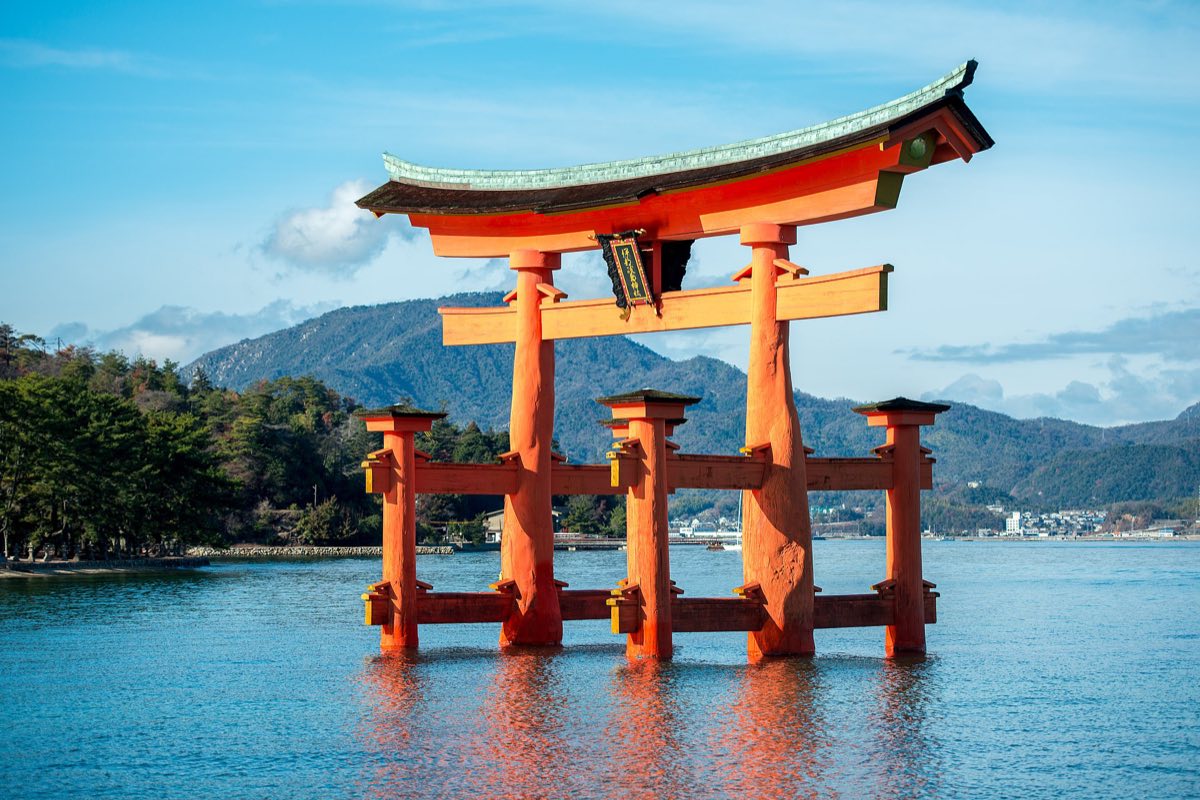
The island is worth a day.
The tide decides
which day.
Miyajima is the best half of a Hiroshima trip and the easiest to get wrong: arrive on a low tide and the famous gate stands on mud, arrive at 11:00 and you queue for it. Here is the whole island ranked, with the fares, the opening hours and the one table you should read before you book the ferry.
Give Miyajima a full day, not the three hours most itineraries allow. The ferry is ¥200 ($1.27) each way, ¥300 ($1.90) once the ¥100 visitor tax is added, and the crossing takes 10 minutes. Itsukushima Shrine is ¥300, Daisho-in is free, and Mount Misen is the best thing on the island. Check the tide table before you pick your sailing — that single decision is worth more than every other choice on this page.
Miyajima runs on the tide, not the clock
The one thing to get rightMiyajima runs on the tide, not the clock. Above 250cm the Great Torii appears to float and the shrine's corridors stand over water; below 100cm you can walk out across the sand to the gate's legs. Those are the Miyajima Tourist Association's own published thresholds, and they are measured against the Hiroshima Port datum — 200cm below mean sea level — so a generic tide app will give you numbers that look similar and are not comparable. Check the official table before you book the ferry, not after.
That is the whole island in one paragraph, and almost nobody writing about Hiroshima says it. The Great Torii is a photograph above 250cm and a climbing frame below 100cm, and in the wide band between the two it is neither. The part nobody publishes: the float is available essentially every day of the year, for about seven hours; the walk is not — it was possible on 106 of the 153 days between August and December 2026, and on only 16 of 30 November days. Look your date up before you buy the ferry ticket: the tide bands, the datum trap and the dead stretches.
Miyajima between 10:00 and 15:00 is a queue with an island attached. The last ferries take the crowds away and take the open shops with them, so a 16:00 arrival gets you an island with nothing on it. The torii lit after dark, and the deer in empty streets, are only available if you sleep there.
Miyajima's five-storey pagoda has been fully sheeted for preservation work since January 2025 and stays that way into at least 2027. It is not visible from anywhere on the island. Every photograph you have seen of it is pre-2025 — plan the shot you actually can take instead.
Practically, that means one of two plans. Either take an early ferry — the shrine opens at 06:30 and the first crowds do not land until about 09:00, so that window is effectively private — and climb Misen in the afternoon, or sleep on the island for the lit torii and the empty streets. What does not work is the 13:00 arrival with a 16:00 train to catch: the island's entire apparatus shuts between 16:00 and 18:00.
Budget for the day: ¥500 ($3.17) on the ferry including the ¥100 visitor tax, which is charged on the outbound leg only, ¥300 ($1.90) for the shrine, ¥100 for Senjōkaku, and ¥1,100 ($6.97) if you ride the ropeway up and walk down. That is ¥2,000 ($12.68) before food for a UNESCO site, a ¥100 hall nobody writes about and a 535m mountain. Take the ropeway both ways instead and it is ¥2,900.
Everything on Miyajima, in order
Ranked- 01
Time your ferry to the tide
The decision that outranks every other decision on the island. Above 250cm the gate floats and the shrine's corridors stand over water; below 100cm you walk out across the sand and stand under it. The two states are about six hours apart. If you can only pick one, pick the high tide — it is the photograph you came for.
- 02
Itsukushima Shrine
¥300 ($1.90) adult, ¥200 high school, ¥100 elementary and junior high, ¥500 combined with the Treasure Hall. Several pages ranking for this shrine print ¥100 — that is the child rate, and it is wrong. Opens 06:30 and closes 18:00, with the Treasure Hall shutting an hour earlier at 17:00 — so an evening arrival gets the illuminated exterior from outside and a locked corridor.
- 03
Daisho-in temple
Free, uncrowded, and the thing island visitors most often say they wish they had allowed time for. Spinning sutra wheels up the staircase, 500 rakan statues, a cave of a thousand lanterns. Ten minutes' walk from the shrine and about a tenth of the people. If your day is short, do this instead of the ropeway.
- 04
Mount Misen — the summit
The best view in Hiroshima prefecture and the reason to give the island a full day. Three walking routes — Momijidani about 2 hours, Daisho-in about 90 minutes, Omoto about 2 hours — and the summit observatory is 30 minutes beyond where the ropeway stops. Take the Daisho-in route up and Momijidani down. One correction almost no English guide carries: the Reifudō hall and its 1,200-year flame burned down on 20 May 2026, and there is a detour near the summit.
- 05
The Miyajima ropeway
Ride up for ¥1,100 ($6.97) and walk down. The one-way fare is ¥900 cheaper than the ¥2,000 return, the descent is the better direction on foot, and it removes the 16:30 last-descent risk entirely. Child fares are ¥1,000 and ¥550, under-6s ride free, and Hiroden's ¥1,000 Streetcar & Ferry pass cuts the return to ¥1,500. Note what it does not do: it stops at Shishiiwa, not the summit.
- 06
Staying the night on the island
The strongest recurring upgrade advice for this whole region, and it is right. The torii lit after dark and deer in empty streets exist only for people who sleep there. The catch is price: island inventory is ryokan with two meals included, so the floor is roughly double the mainland's. Three days in Hiroshima, take one island night. Two days, day-trip it without regret.
- 07
Anago-meshi, oysters and momiji manju
Conger eel over rice is the Miyajimaguchi dish and Ueno is the shop that made it famous. Oysters are a winter thing — roughly October to March, peaking December to February — so a July visit gets the farmed Kaki Komachi variety and a lot of places not doing them at all. Momiji manju are everywhere; the fried ones are better.
- 08
Momijidani Park
Free maple valley behind the shrine, and the start of the 2-hour Momijidani trail up Misen. In the second half of November it is one of the best autumn sites in western Japan and the ferries are correspondingly full. In August it is a pleasant shaded 20-minute walk to the ropeway station and nothing more.
- 09
The deer
They are not Nara's deer. They do not bow, nobody sells crackers, and they are smaller. Feeding has been illegal since 2008, so they eat paper instead — maps, ferry tickets and guidebooks go regularly. Worth ten minutes; not worth planning a day around.
- 10
Getting there from the city
JR Sanyo line to Miyajimaguchi then a 10-minute ferry is the fast route at about 45 minutes door to door. Hiroden line 2 is slower at 70 minutes but cheaper and runs from the city centre. Two ferry operators charge an identical ¥200 each way; only one of them is covered by the JR Pass.
- 11
The ¥100 visitor tax
Charged per person on the outbound leg only since 1 October 2023, normally collected with the ferry ticket, so most visitors never notice it. Rail-pass holders are the trap: the JR Pass covers the JR ferry but not the tax, so you still buy a separate ¥100 ticket at the terminal. Not one of the ten pages ranking for this island mentions it.
- 12
Where to sleep on Miyajima
The island has very few rooms and most of them are ryokan quoting per-person rates with dinner and breakfast. That is why the island's floor sits at roughly twice the city's. Book early for autumn and for any weekend; if the island is full, Miyajimaguchi and Hatsukaichi on the mainland are five minutes from the ferry.
What a Miyajima day actually costs
The moneyPer adult, in yen first. Every figure below was checked on 4 August 2026.
| Line | Price | $ | Notes |
|---|---|---|---|
| Ferry, each way | ¥200 | $1.27 | JR West or Miyajima Matsudai Kisen — identical fare, ¥100 child, 10 minutes |
| Visitor tax | ¥100 | $0.63 | Outbound leg only, since 1 Oct 2023. Rail passes do not cover it |
| Ferry return, all-in | ¥500 | $3.17 | ¥300 out, ¥200 back |
| Itsukushima Shrine | ¥300 | $1.90 | ¥500 with the Treasure Hall; ¥100 elementary and JHS |
| Daisho-in | Free | — | The island's best temple, and it costs nothing |
| Ropeway, return | ¥2,000 | $12.68 | ¥1,000 child; ¥1,800 for 65+ and groups of 15+. Last descent 16:30 |
| Ropeway, one way | ¥1,100 | $6.97 | Our pick — ride up, walk down. ¥550 child, under 6 free |
| Senjōkaku | ¥100 | $0.63 | 8:30–16:30. The best-value ticket in the prefecture |
| Treasure Hall | ¥300 | $1.90 | 8:00–17:00 — it shuts an hour before the shrine does |
| Mount Misen on foot | Free | — | 90 min–2h up depending on route |
| Momijidani Park | Free | — | Peak autumn colour mid-to-late November |
| Miyajima Aquarium | ¥1,420 | $9.00 | 9:00–17:00, last admission 16:00. ⚠ Closed 1 Dec 2026 – 31 Mar 2027 |
| Five-storey pagoda | Not visible | — | Fully sheeted for preservation since January 2025, into at least 2027 |
Dollar prices convert at ¥157.7 = $1, the rate on 4 August 2026. Treat every $ figure as a snapshot and the ¥ figure as the real price.
Miyajima, practically
Plan your visitGuided Miyajima, if you want the context
Book itThe island is easy to do alone — the ferry runs every 15 minutes and the shrine is a five-minute walk from the pier. A guide buys you the history and the tide planning, not access. We do not publish tour prices or ratings here because we could not verify them; check them on the operator's page.
Miyajima questions, answered
FAQPage schema pairedHow long do you need on Miyajima?
A full day. The shrine takes 40–60 minutes, Daisho-in another 45–90, and Mount Misen is 2 hours up and 90 minutes down on foot — that is already six hours before lunch or the deer. The common three-hour allocation covers the shrine and the crowd and nothing else.
Is Miyajima worth it?
Yes, and it is the strongest half of a two-day Hiroshima trip. The day comes to about ¥2,000 ($12.68) before food — ¥500 return on the ferry including the visitor tax, ¥300 for the shrine, ¥100 for Senjōkaku and ¥1,100 to ride the ropeway up — which is remarkable value for a UNESCO site and a 535m mountain.
What time should I get the ferry to Miyajima?
Whatever time puts you on the island at a tide above 250cm for the floating gate, or below 100cm to walk out to it — and on most dates you can do both, six hours apart. Failing that, sail before 09:00: the shrine opens at 06:30 and the first crowds do not land until about 09:00, while the 10:00–15:00 block turns the corridor into a single-file queue.
Do I have to pay the ¥100 visitor tax?
Yes, per person, charged on the outbound leg only since 1 October 2023, unless you are a resident, a worker, a student commuting to the island or a preschooler. It is normally bundled into the ¥300 outbound ferry ticket. Rail-pass holders buy it separately at the terminal because no pass covers it — and the ¥500 annual pass needs in-person registration, so just pay the ¥100.
Can you see the torii gate at low tide?
You can walk out to it below 100cm — but not on every date. That threshold was reached on 106 of 153 days between August and December 2026, and from 20 to 24 August the tide never dropped below it at any hour. Above 250cm the gate appears to float, which is available essentially every day for about seven hours.
Is the Miyajima ropeway worth ¥2,000?
Not as a return ticket. Pay ¥1,100 one way, ride up, and walk down in 75–90 minutes — that saves ¥900 ($5.71) and removes the risk of missing the 16:30 last descent. Buy the return only if you have small children or under three hours of daylight left, or if you hold Hiroden's ¥1,000 Streetcar & Ferry pass, which cuts it to ¥1,500.
Should I stay overnight on Miyajima?
If you have 3 days in Hiroshima, take one island night; if you have 2, day-trip it. Island beds run roughly double the city's — Booking's listings start around ¥12,000 against about ¥5,500 in the city — and what the premium buys is the shrine at 06:30, two and a half hours before the first crowds land, plus the torii lit from 30 minutes after sunset until 23:00.