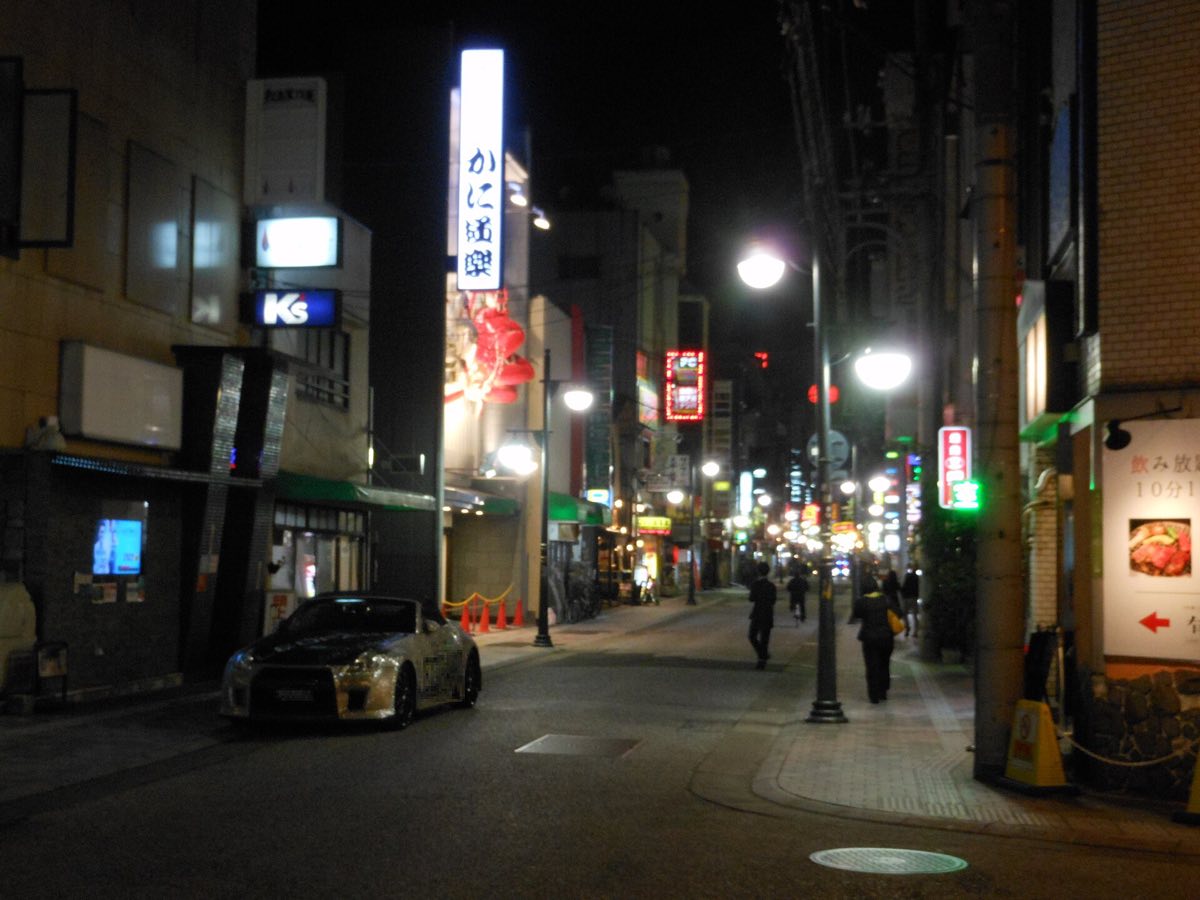
Locals do not eat
where the listicles
send you
Peace Park has almost no restaurants and the Hondori arcade has chains. The eating happens two blocks east in Nagarekawa and Yagenbori, in the narrow strips beside Hiroshima Station, and in neighbourhoods most visitors never cross the river to reach.
Eat in Nagarekawa and Yagenbori after dark, in the Ekinishi strips west of Hiroshima Station if you are staying by the trains, and in Yokogawa if you want a night with no other visitors in it. For okonomiyaki, locals name Micchan Sōhonten (¥960 standard), Nagataya (¥1,000–1,999), Hassei and the cult pick Lopez. ⚠️ Micchan and Nagataya both close on Tuesdays and neither takes reservations.
Why the tourist map has no food on it
Answer firstThe Peace Memorial Park is a park. It has a museum, a rest house and almost no restaurants, by design and by decency — nobody built an eating district on it. Visitors then walk east into the Hondori arcade, which is a covered shopping street with the chains a covered shopping street has. Two blocks further east, past Chuo-dori, is where Hiroshima actually eats, and almost nothing in English tells you to cross that road.
Hiroshima is a comfortable, well-run, entirely ordinary mid-size Japanese city. The bomb took the old fabric and the rebuild was practical rather than picturesque. Come for the Peace Park, the island and the food — not for the streetscapes. The mistake almost everyone makes is giving the important part four hours and the ordinary part none.
So the instruction is unusually simple for a city this size: get across Chuo-dori into the Nagarekawa and Yagenbori grid, or get to a neighbourhood station area, and stop trying to eat within sight of the Dome. The whole shift is about 10 minutes on foot or one ¥240 tram ride.
Six places to eat where the room is local
Ranked- 01
Yagenbori — the dense, older grid
The tighter, scruffier, more interesting half of the central nightlife district: narrow lanes of eight-seat izakaya, okonomiyaki counters and standing bars, many with no English and no website. This is the single best area in the city for an unplanned evening. Walk it, look through doorways, and take the place that has people in it. We are naming the district, not specific shops — individual venues here turn over quickly and none were verified.
- 02
Nagarekawa — the main after-dark district
Bigger, brighter and busier than Yagenbori next door, and the default answer when a Hiroshima local says "let's go out". Izakaya, yakitori, late okonomiyaki, karaoke and bars stacked in multi-storey buildings — read the vertical signs, because half the good rooms are on the fourth floor. Busiest Thursday to Saturday from about 20:00.
- 03
Ekinishi — the strips west of Hiroshima Station
Low-rise lanes of tiny bars and counters immediately west of Hiroshima Station, and the obvious answer if your hotel is by the trains and you do not want to commit to a tram at 22:00. It has been quietly revived over the last decade and is now one of the better small-bar clusters in the city — while still being where people who work near the station drink.
- 04
Yokogawa — the neighbourhood with no visitors in it
One JR stop north of Hiroshima Station and the terminus of two Hiroden lines, Yokogawa is a working neighbourhood station area with small bars, ramen counters and izakaya and essentially no tourist traffic. Go here if the thing you want is not a specific dish but a normal Japanese evening in a city that mostly shows visitors its memorial.
- 05
Hatchobori and Fukuromachi at lunchtime
The central office grid empties into set-meal counters, noodle shops and okonomiyaki griddles between 11:30 and 13:30 on weekdays, and those queues are entirely local. Outside that window it reverts to a shopping district. Time it right and the same street is a completely different place — this is a lunch verdict, not a dinner one.
- 06
Funairi and the west-bank residential streets
Across the water from the tourist centre, the streets thin out into ordinary residential Hiroshima with the ordinary neighbourhood restaurants that implies. Rewarding if you have three days and are past the checklist; a waste of an evening if you have one and have not eaten okonomiyaki yet. No specific venues verified here.
The districts, with the tram stop
ComparedEvery one of these is reachable on the flat ¥240 streetcar fare. The day pass is ¥700 and pays from ride three.
| District | What it is | When it works | How to get there | Verdict |
|---|---|---|---|---|
| Yagenbori | Narrow lanes, tiny counters, no English | 19:00–24:00 | Hiroden 1/2/6 to Ebisucho, 3 min walk | WORTH IT |
| Nagarekawa | The main nightlife grid, multi-storey | 20:00 onward, Thu–Sat | Hiroden 1/2/6 to Ebisucho or Hatchobori | WORTH IT |
| Ekinishi | Small-bar strips west of the station | 18:00–24:00 | Walk 5–10 min west from Hiroshima Station | WORTH IT |
| Yokogawa | Neighbourhood station area, no tourists | 18:00–23:00 | Hiroden 7 or 8 to Yokogawa; 1 JR stop | WORTH IT |
| Hatchobori / Fukuromachi | Office lunch counters | Weekdays 11:30–13:30 | Hiroden 1/2/6 to Hatchobori | DEPENDS |
| Funairi | Residential west bank | Evenings, day 3+ | Hiroden line 3 westbound | DEPENDS |
| Hondori arcade | Covered shopping street, chains | Rain, and shopping | Hiroden to Hondori or Kamiyacho | SKIP |
Hiroden went to a flat ¥240 adult / ¥120 child fare on 1 February 2025, its first revision in seven years, replacing the old distance-based ¥140–270 scale. The all-day streetcar pass is ¥700, so it pays from your third ride — which is exactly what a Peace Park, castle and station day comes to.
The okonomiyaki counters locals repeat
Named countersThese are the standalone shops that come up again and again from Hiroshima residents and in Japanese-language coverage. The first two are now verified from the restaurants' own information; the last two are names only, and we say so.
| Counter | Where | Price | Hours and closing day | Booking |
|---|---|---|---|---|
| Micchan Sōhonten | Hatchōbori · branches at ekie (Hiroshima Station) and Orizuru Tower | ¥960 soba or udon · squid+shrimp ¥1,500 · oysters ¥1,840 · DX ¥2,030 | Mon, Wed–Fri 11:30–14:30 & 17:30–21:00 · Sat/Sun/hols 11:00–14:30 & 17:00–21:00 · closed Tue | Walk-in only |
| Nagataya | Ōtemachi — about 10 seconds from Peace Memorial Park, 2 min from Genbaku Dome-mae | ¥1,000–1,999 · uses Otafuku sauce and Isono-men noodles · 52 seats | From 11:00, last orders ~20:00 — don't arrive after 19:30 · closed Tue and 12–14 Aug | Walk-in only |
| Hassei | Naka-ku · plus the new Sannomaru quarter at Hiroshima Castle, open since 29 Mar 2026 | Unverified | Unverified | Unverified |
| Lopez (ロペス) | Naka-ku | Unverified | Unverified | Unverified |
Tuesday is the trap — the two best-documented counters both close on it. If your one free night is a Tuesday, use Okonomimura (23 stalls, hours vary by stall) or the ekie Okonomiyaki-dōri inside Hiroshima Station. Lopez is the cult pick: Guatemalan-run, with a tortilla-influenced handmade crêpe base instead of the standard batter — a genuine local favourite, and unverified for hours and prices. The dish itself is explained on the okonomiyaki page.
Current listings for the three counters
Check before you walkHours move and small counters do not always announce it. Thirty seconds on these listings the night before will tell you whether tonight is a closing day and how the queue is running.
Walking into a counter with no English
How to do itA ten-seat shop with six people in it at 19:00 is the signal. An identical shop next door with nobody in it at 19:00 is also a signal. This is the entire selection method in Yagenbori and it is more reliable than any review score.
Peak is roughly 19:00–21:00. Arrive at 17:30 and you will get a seat anywhere.Hold up fingers for your party size at the door. Staff will either wave you in or say something that clearly means no — small counters sometimes take regulars only when full, and that is not personal. Move on to the next door; there are 20 of them on the street.
Izakaya work as rounds, not as courses. Order 2 or 3 dishes and a drink, then order again. Trying to order a whole meal at once is the most common visitor error and it arrives all at the same time.
Many izakaya add a small per-person seating charge (otoshi) that comes with a little dish you did not order. It is normal, it is not a scam, and it is usually a few hundred yen — we have not verified typical amounts in Hiroshima, so treat it as a small line rather than a number.
Card acceptance is now common but not universal in the small counters this page is about, and some places are cash-only after a certain hour. Carry ¥5,000–10,000 in notes for an evening out and read the practical page on ATMs.
The shortcut into rooms with no English
Book itThis is the one page in this cluster where a guided tour has an obvious, non-lazy justification: somebody who can get you through a curtain into an eight-seat counter and order for you. We do not publish tour prices, ratings or review counts on this site — none could be verified for this build.
Where-to-eat questions, answered
FAQPage schema pairedWhere do locals eat in Hiroshima?
In the Nagarekawa and Yagenbori grid two blocks east of the Hondori arcade, in the Ekinishi strips west of Hiroshima Station, and in neighbourhood areas like Yokogawa. That is a 10-minute walk or one ¥240 tram ride from the tourist centre, and it is the single biggest upgrade available to a visitor's evening here.
Which okonomiyaki counters do locals recommend?
Four names recur. Micchan Sōhonten in Hatchōbori — ¥960 for the standard soba or udon build, closed Tuesdays, walk-in only. Nagataya, about 10 seconds from Peace Memorial Park, ¥1,000–1,999, also closed Tuesdays and 12–14 August. Hassei, now also at Hiroshima Castle's Sannomaru quarter since 29 March 2026. And Lopez, the Guatemalan-run cult pick with a tortilla-influenced crêpe base — hours and prices unverified for the last 2.
Is Okonomimura where locals eat?
No. It is a genuine institution and worth 45–60 minutes as a spectacle, but it scores 4.1 from 1,058 TripAdvisor reviews and the room is mostly visitors most nights. Read the full verdict — the honest position is that it is fun and touristy at the same time, and that both halves are true.
Should I eat near Peace Memorial Park?
There is very little there to eat, which is appropriate. Walk 10–15 minutes east across Chuo-dori, or take Hiroden line 1, 2 or 6 two stops to Hatchobori, and you are in the actual eating city. Plan the day around it with the 2-day itinerary or the park page.
What time do Hiroshima restaurants get busy?
Counters fill from about 19:00 to 21:00, Thursday to Saturday hardest. Arrive at 17:30–18:00 and you can walk into almost anything; arrive at 20:00 on a Friday in Nagarekawa and you are queueing or climbing to a fourth floor. Lunch counters peak in a narrow 11:30–13:30 window on weekdays.
Do I need reservations?
No — and at the two best-documented okonomiyaki counters you cannot. Micchan Sōhonten and Nagataya are both explicitly walk-in only, no reservations. Larger izakaya and anything with a set course will take bookings. Treat the named counters as first-come and arrive at 17:30, which is about 90 minutes before the queue forms.
What is closed on Tuesdays?
Both Micchan Sōhonten and Nagataya — the 2 okonomiyaki counters this city sends people to. Nagataya also closes 12–14 August for Obon. The fallbacks that stay open are Okonomimura, whose 23 stalls keep individual hours, and the ekie Okonomiyaki-dōri inside Hiroshima Station. Check before you commit a Tuesday evening.
Is cash necessary in Hiroshima's small restaurants?
Cards are now widely accepted but not universally, especially in the eight-seat places. Carry ¥5,000–10,000 in notes for an evening. ATMs at convenience stores accept foreign cards; the practical detail is on the practical page, and the rest of your budget on the costs page.
Is it rude to walk into a tiny counter as a foreigner?
No. It is normal, and Hiroshima gets 945,618 foreign museum visitors a year — nobody is surprised to see you. If a shop waves you off it is usually because it is full or the last order has gone in, not because of who you are. Hold up fingers for your party size and try the next door if this one is full.
Continue planning
Keep decidingEat it with a local
Hiroshima food tours & tastings — guided street-food crawls and cooking classes with vetted operators, most with free cancellation.